|
|
樓主 |
發表於 2022-4-27 17:05:32
|
顯示全部樓層
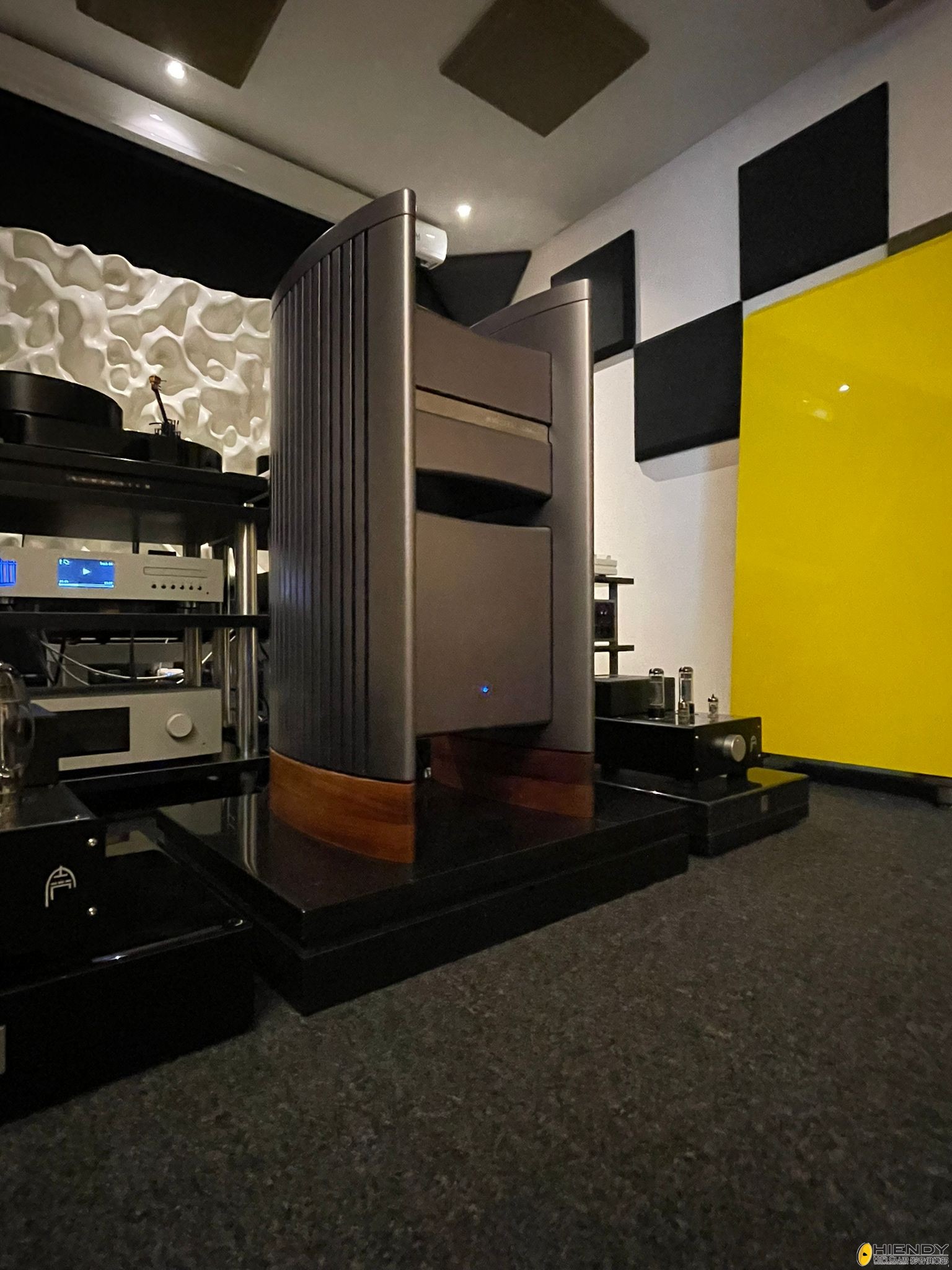
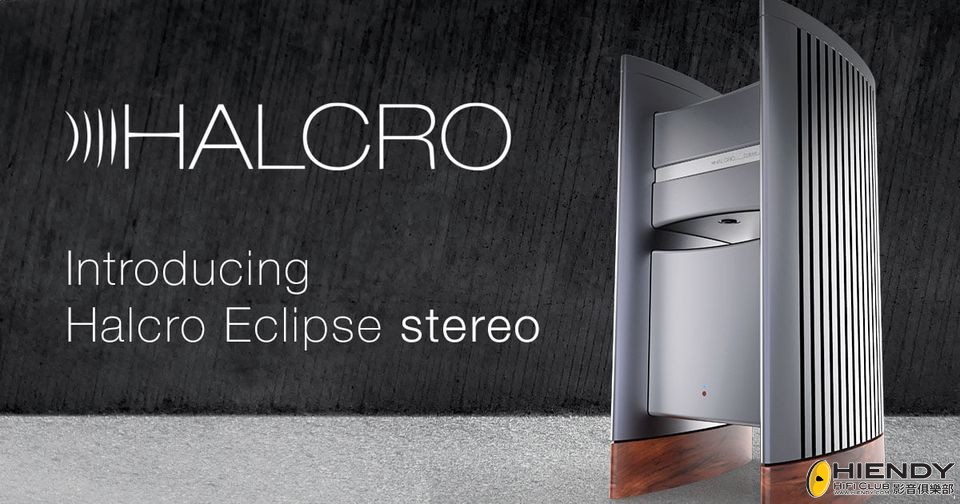
Halcro have been wearing their collective underpants on the outside the day they decided to measure the final product. They were stunned to discover that the new Eclipse Stereo model measured significantly better, yet sounded significantly more musical, than the last Halcro flagship, the now mythical dm88 power amplifier.
The output stage is run in Class-A/B, close to Class-A. But the Halcro amplifier is not a fully complementary symmetrical circuit because this will be heard as only inharmonious odd-order harmonic distortion.
The genius output stage is housed (and physically isolated) in separate, heavily shielded chambers with one stereo channel in each of the vertical towers or ‘wings’ of the Halcro’s iconic ‘big H’ shaped enclosure. The towers or ‘wings’ also act as the finned heatsinks for the amplifier. The high-current output stage is separated from the input stage by a substantial eddy current screen so that any non-linear effects generated by magnetic noise coupling of the V-FETs are isolated from the input stage.
The power supply section gets four-layer PCBs to minimize voltage spikes and E.M.I. (and “A & M”…) to improve power supply efficiency and reliability. I’ll come back to the vertical, sectional (not modular) chassis design because this is one of the areas where the Longwoods have made musically significant improvements.
For those with super hearing, the Halcro Eclipse Stereo amplifier has an extremely wide frequency bandwidth. Its frequency response is claimed to be only -3dB down at a very high frequency point of 215 kHz (3 Hz – 215 kHz, measured at an output of 1 watt) and is -1dB down at 90 kHz (7 Hz – 90 kHz, again at 1 watt). |
|




 IP卡
IP卡 狗仔卡
狗仔卡
 發表於 2022-3-30 11:48:22

 提升卡
提升卡 置頂卡
置頂卡 沉默卡
沉默卡 喧囂卡
喧囂卡 變色卡
變色卡 顯身卡
顯身卡
 發表於 2022-3-30 13:51:23