|
|
樓主 |
發表於 2023-9-1 02:53:22
|
顯示全部樓層
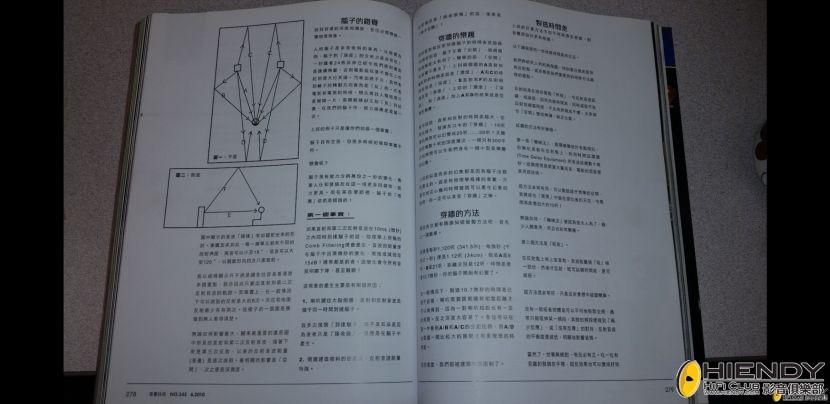
是唔是這篇?
如在「搜尋」打入"室交連"便找到那討論帖, 在此我或可轉载那精要:
(By Limage on 07-04-15 at 21:33)
SPEAKER PLACEMENT AND ROOM COUPLING
Few of us, except perhaps the rare species of odd fossils of the pre-historic era, would have questioned the paramount importance of speaker placement nowadays. What is more debatable is where and how the speaker positions are to be determined. I have been a faithful follower of the room-coupling school and I believe that should be the best way out.
Room coupling, I am quite positive by now, really goes beyond the deliberations over direct verses reflected sound sources, because the focal point remains relatively constant irrespective of what damping treatments we have on the wall surfaces in any given room. This focal point does not seem to move until the dimension of the room is drastically changed.
To achieve effective room coupling, one has to locate the focal spot of the room first. There is a simple yet effective method to find this spot but I shall come back to that a while later. Every room has its own peaks and valleys acoustically. The peaks are resonances and the valleys are just the opposite, the suck-outs as a result of phase cancellation. I used to believe the coupling point is the spot where multiple resonances gravitate since it clocks the highest sound level throughout the audio band. If we look at it the other way round, however, the focal point of the room should more correctly be taken as the spot where phase cancellation is the lowest.
When the speakers are placed along this focal spot, phase cancellation would be at its minimal obtainable within the room and the system will then be able to resolve, with the best of fidelity and the least of distortion, the myriads of spatial information contained in the recording. The width and depth, the ambience, the layering and instrument placements etc. will all spring to life. Proper sound staging, no doubt, has much to do with this phase coherency across the audible frequency range. We all know what would happen if one speaker is inverted in phase—there will be no imaging, no soundstage, and even no sense of direction. This is the result of serious phase cancellation. Even if the speakers are properly in phase, however, there would still be a fair amount of cancellation depending on where the speakers are placed.
Ideally speaking, the room should be symmetrical in overall shape and the speakers symmetrically placed along the lengths of the rectangle. If one speaker is close to the side wall while the other is in the middle of the room, a rather common sight given the popular L-shape layout of sitting rooms in HK, there exist more chances for cancellation taking place at various frequencies, rendering the imaging blurred, stage collapsed and ambience lost.
Once the speakers are coupled to the room, the two merge into one. The room becomes an effective extension of the speakers which in turn would cease to exist visually. Tuning for solid imaging then becomes much easier. Human ears locate the sound source by detecting the time difference of direct sound arriving at the ears. To achieve three dimensional imaging, all we have to do is to cut down secondary reflections from overwhelming the direct sound. While on this subject, I like to point out that I have tried the live-end-dead-end approach and it did not work to my satisfaction. I believe speakers are designed with the average western style living room in mind where upholstery, curtain, carpet and furniture all contribute to an acoustic environment which is neither too dead nor too live, but moderate throughout. This is something worth considering when we set about fabricating our listening area. It is not uncommon to find that the more elaborately contrived the HiFi room is, the less satisfactory it often turns out.
Some fellow audiophiles suspect that because of the rather up-front placement of my speakers and because they are dipoles which radiate both ways, the large volume of space behind the speakers is encouraging tremendous amount of diffused reflections to create an artificial depth of field. Not so. Multi-mike mixed down recordings are rendered as they are, with absolutely no depth and instruments do stick with the speakers whereas a good concert hall recording has the ability to project the soundstage well beyond the boundaries of my small room while the speakers, despite their imposing size, simply disappear without a trace. Artificial depth just cannot differentiate as such.
All in all, phase coherence does appear to be the key and with this key we stand every good chance to unleash a completely new dimension of audio realism.
*****
Here comes the core—the action part of the whole thing, a method that has proven to work wonders for me over the last 30 odd years.
Have the speakers placed along the lengths of the room, about ¼ to 1/3 from the back wall, and ¼ the breadth roughly. Then play some vocal music, the hilarious type, the more instruments the better.
Now walk slowly to and fro along the mid-line between the speakers, from one end of the room to the other and then back, may be several times to get the mind set (if the speakers are standing low, you may well have to crawl). Somewhere along the aisle, you would hear the sound getting louder and at the same time it rises above your head, filling the ceiling as if you’ve entered a Gothic church. Bingo, that is it, the focal point.
Mark this focal point and drag your speakers over the lateral line crossing the spot. You’ve just coupled your speakers to your room. What is left, may be the crucial part yet, is to find the perfect stereo seat. As the name suggests, you’ll have to look for the widest stereo soundstage again along the aisle, between the speakers. If one side of the room does not give you the best definition and soundstage, try the other side. I was the one having my seat moved over to the wrong side of the room to get the best out of my system.
Final note, if you are unable to find the focal spot despite trekking up and down diligently the whole afternoon, your room dimension is probably too bad to be a listening room. Try another room if you have one. If not you’ll have to move house.
___________________________________________
google翻譯的:
音箱佈置及房耦合
我們幾個,除了可能多的稀有物種化石的史前時代,就必須質疑揚聲器的位置非常重要現今。更重要的是有爭議的是在哪裡以及如何
揚聲器位置待定。我一直是忠實追隨者的房間耦合學校,我相信這應該是最好的出路。
耦合室,我現在很積極的,真的超出了審議以上直接反射聲源的詩句,因為聯絡點保持相對穩定,不論什麼阻尼處理,我們對牆面在
任何特定的房間。這個焦點似乎並不移動,直至房間尺寸的急劇變化。
為了實現有效的空間耦合,就必須找到焦點的包間。有一個簡單而有效的方法來尋找這個地方,但我會回來,一個在後面。每個房間
都有自己的波峰和波谷聽覺。共振的峰和谷則正好相反,在吸超時,結果相抵消。我曾經相信耦合點是現貨有多個共振被吸引,因為
它的時鐘最高音量整個音頻頻段。如果我們看它倒過來,不過,重點的房間應該更正確地被視為取消所在的地方是最低的階段。
當音箱被放置在沿著這條焦點,相取消將在其最小的索取的房間內,系統將能夠解決,最好的保真度和最小的變形,無數的空間信息
包含在錄製。寬度和深度,氛圍,分層和存款等手段都將春天的生命。正確的聲卡分期,無疑有很大的一致性,與此相在整個可聽頻
率範圍。我們都知道會發生什麼,如果一個發言的是倒在相不會有成像,沒有音場,甚至沒有方向感。這是導致嚴重的階段被取消。
即使揚聲器是正確的階段,但是,仍然會有相當數量不同的地方取消揚聲器的位置。
理想上說,房間應該是對稱的整體形狀和揚聲器放在沿長度對稱的矩形。如果一個發言的是靠近側牆,而另一種是在中間的房間,看
到一個相當普遍的流行給 L形佈局的客廳在香港,存在著更多的機會註銷發生在不同的頻率,使成像模糊,舞台倒塌和氛圍丟失。
一旦揚聲器耦合到房間,兩個合併成一個。這個房間成為一個有效的擴展揚聲器這反過來將不復存在視覺。調諧固體成像然後變得更
加容易。人類的耳朵找到聲源,通過檢測的時間差,直接的聲音到達耳朵。為了實現三維成像,我們所要做的就是減少二次反射直接
從鋪天蓋地的聲音。而在這個問題上,我想指出,我已經嘗試活最終窮途末路的做法,並沒有工作,我感到滿意。我相信揚聲器設計
,平均西式起居室介意座墊,窗簾,地毯和家具都有助於聲環境,既不是太死,也不能太生活,但溫和各地。這是值得考慮的,當我
們著手製作我們的聽音區。這並非罕見地發現,更精心預謀的音響室,就越滿意,往往變成了。
一些資深發燒友懷疑,因為在相當預先放置我的發言,因為他們是偶極子的輻射左右逢源,大體積的空間背後的揚聲器是令人鼓舞的
漫反射大量的人工營造景深。事實並非如此。多麥克風錄音呈現混合下來,因為它們是,完全沒有深度和文書並堅持使用揚聲器,而
一個好的音樂廳錄製的能力,遠遠超出項目的聲場的邊界,而我的小房間的揚聲器,儘管他們實行大小,只需消失得無影無踪。人工
深度就是不能區分這樣。
總之,相連貫性也似乎是關鍵,用這把鑰匙,我們站在每一個良好的機會向世界展示一個全新的層面音頻的真實感。
*****
接下來是核心的行動的一部分,整個事情,一個方法,已被證明為我創造奇蹟,在過去 30多年。
有發言者一起放在了房間的長度,約 6.3至1 / 3來自後牆,大致的廣度和¼。然後播放一些人聲的音樂,熱鬧的類型,更多樂器越好
。
現在,慢慢地來回走沿中線之間的發言後,從一端到另一房間,然後回來,可能會多次獲得思維定勢(如果揚聲器是站在低,你可能
要抓取)。某處沿著過道,你會聽到聲音越來越響,並在同一時間上升超過你的頭,填補了上限,如果你進入了一個哥特式教堂。賓
果,就是它的著力點。
紀念這個聯絡點,並拖累你的音箱在側線穿過的地方。你剛剛加上您的揚聲器到您的房間。什麼是左,可能是至關重要的一部分,但
,就是要找到完美的立體聲席位。顧名思義,你必須尋找最廣泛的立體聲聲場又過長長的走廊之間的揚聲器。如果一方的房間不給你
的最好的定義和攝影棚,嘗試另一邊。我是第一個擁有自己的座位上移動到錯誤的一邊的房間,獲得最佳的出我的系統。
最後一點,如果您無法找到焦點儘管徒步上下認真整個下午,你的房間尺寸大概是太糟糕是一個聽音室。嘗試另一個房間,如果你有
一個。如果不是你就必須搬家。 |
|



 IP卡
IP卡 狗仔卡
狗仔卡
 發表於 2023-8-31 21:41:21


 提升卡
提升卡 置頂卡
置頂卡 沉默卡
沉默卡 喧囂卡
喧囂卡 變色卡
變色卡 顯身卡
顯身卡


 發表於 2023-9-1 08:20:57