|
|

Linn DS = (Digital Stream Player)
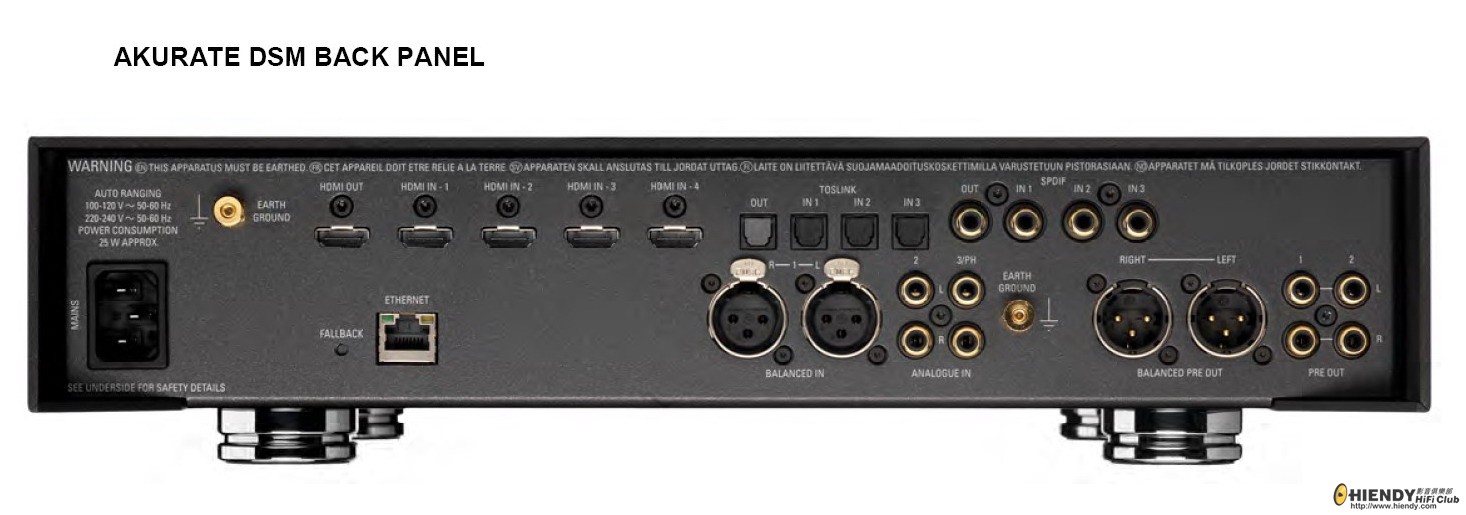
Linn DSM = (Digital Stream Media Player ?) with Digital Inputs (HDMI / SPDIF / TOSLINK)
Majik DSM
Akurate DSM
Klimax DSM
http://www.linn.co.uk/systems/ds#range
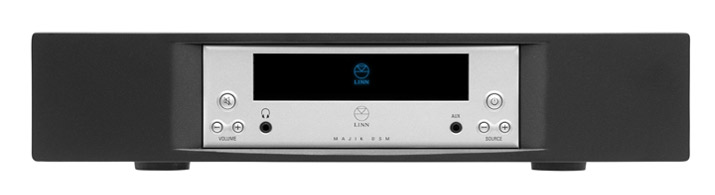
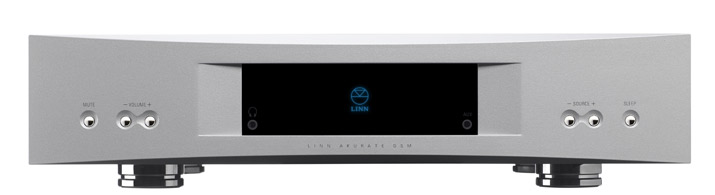
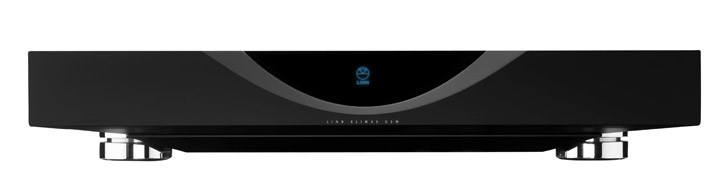

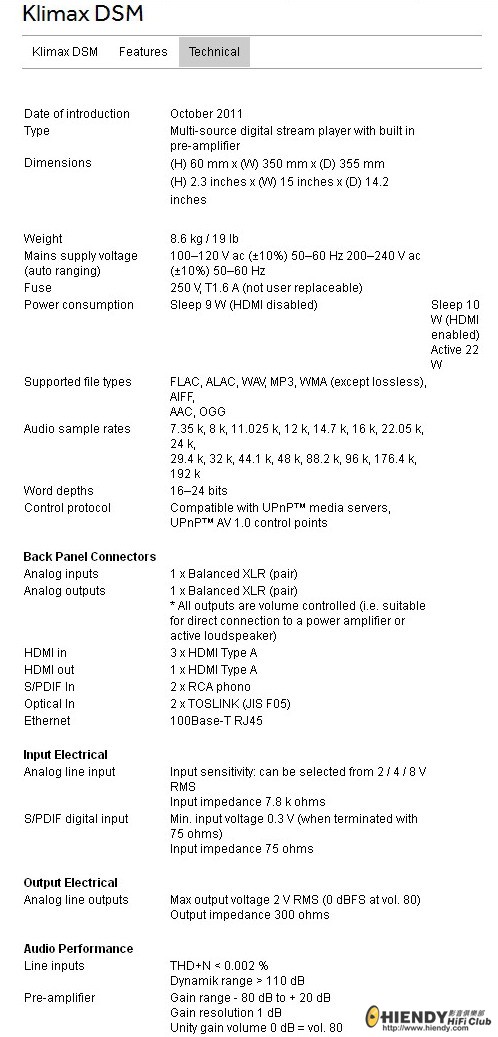
Here is a brief note of some of the technical details.
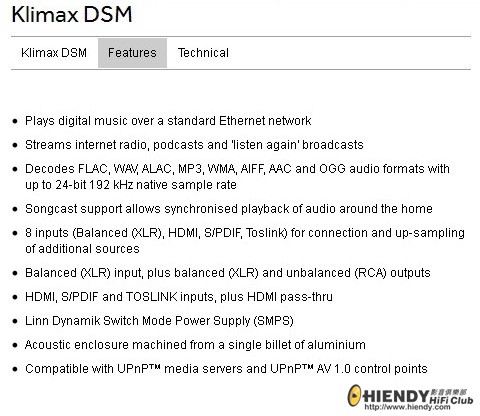
The DSM products are stereo devices capable of rendering 2 channels of audio presented to any of their analog or digital inputs.
The digital inputs (HDMI, SPDIF, TOSLINK) will accept decoded (PCM) streams.
Any encoded formats selected by the user to be sent to the KDSM (Dolby, DTS etc) , will be rejected (muted)
Any video present on the HDMI input will be passed directly via the HDMI output to the TV.
What's a typical use of a DSM system with Bluray?
Simply put, the DSM will be used to make the audio sound better than it currently does via the direct Bluray to TV set audio connection. In the case of the Klimax DSM (KDSM), the connection will be from the Bluray player HDMI out to one of the KDSM HDMI inputs, and again from your KDSM HDMI out to the TV HDMI in. Then with the Bluray player's HDMI output set to "Auto", the Bluray player will send the appropriate audio formats and sample rates to the DSM. In this case, the Bluray audio stream PCM is decoded by the Bluray player, which is a feature supported by the vast majority of current Bluray players on the market today, including a basic PS3.
The end result, in this typical use case, is your Bluray movies sound better. :-)

Finally, here are a few additional notes on audio over HDMI, decoding vs. rendering, some interesting SACD opportunities and maybe something for the future.
Audio over HDMI
This depends on the capabilities of both the sender (Bluray) and the receiver (KDSM). Currently, the KDSM advertises itself as a 2-channel receiver capable of 192kHz/24-bit LPCM playback. It is the sender's responsibility to provide an audio stream that is within the audio capabilities of the receiver. At the very minimum, the sender should be able to provide a stereo 16-bit 48/44.1k stream, regardless of source material, but most sources (e.g Bluray players) as noted above will also decode and down-mix high resolution formats such as Dolby-TrueHD and DTS-HD MA to a hi-res 2-channel LPCM stream.
Decoding vs. Rendering
Modern surround formats such as Dolby True-HD and DTS-HD MA are capable of lossless high-resolution audio, but the performance of these formats is ultimately limited by the quality of the rendering process (i.e. the way digital data is converted into an analog signal). The actual decoding algorithm is unimportant (a lossless decoder is just that) so the KDSM offloads the decoding process to the Bluray player. This has the advantage of removing a potentially noisy and power hungry process which may otherwise have an adverse effect on the delicate analog audio signal. The KDSM focuses instead on being an audio renderer, converting each audio sample in the HDMI stream with the highest possible accuracy. Timing accuracy is achieved by using a unique two-stage clock recovery process, and amplitude accuracy is achieved by employing the same low distortion conversion circuitry as the KDS.
SACD opportunities
Additionally there is some interesting support for SACD playback from a source (Bluray or combo) players which are capable of sending SACD and DVD-A audio over HDMI (HDMI is an approved transmission medium for these formats thanks to its HDCP encryption scheme). There are some limitations, such as SACD bit streams being down-sampled to 176.4k or 88.2k and multi-channel material down-mixed to stereo, however it does give the ability to allow the playback of SACD layers from combo disks which cannot be currently ripped for streamed playback.
For the future...
The DSM currently renders 2-channels of audio, however it does have the potential to access all 8 channels of a multi-channel stream. Assuming the availability of some downstream multi-channel renderer, it will be possible for the KDSM to extract 2 of the 8 channels (e.g. front left/right) and pass the remaining channels on to the downstream renderer. This will present other problems in terms of managing audio delays and channel volumes, however we are reviewing potential solutions to this and would like to address these issues in a future software release.
 |
|




 IP卡
IP卡 狗仔卡
狗仔卡
 發表於 2011-10-12 22:27:46

 提升卡
提升卡 置頂卡
置頂卡 沉默卡
沉默卡 喧囂卡
喧囂卡 變色卡
變色卡 顯身卡
顯身卡









 WTF......


