|
|
樓主 |
發表於 2016-10-19 17:33:06
|
顯示全部樓層
本帖最後由 Avantgarde-HK 於 2016-10-19 17:34 編輯
London (Decca) Jubilee/Reference phono cartridge
By Martin Colloms Michael Fremer
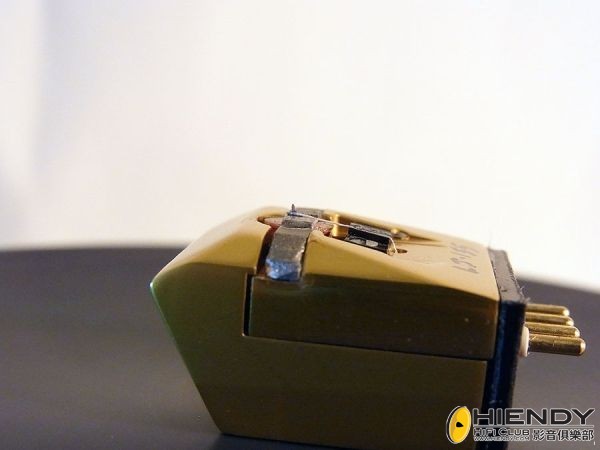
London phono cartridges still carry the famous Decca name (even if only in parentheses), but they are now produced by John Wright, a precision engineer and ex-Decca employee. Wright (not to be confused with his IMF and more recent TDL loudspeaker-designer namesake) was assigned the rights in 1989 by Decca's Special Products division (footnote 1), when the company's new owner, Racal, decided that they didn't want to be involved in the manufacture of audio equipment. Wright worked for 20 years in Decca's phono-cartridge division, where he gained a wealth of experience. As well as manufacturing the current range of London cartridges, he is also responsible for servicing and overhauling older Decca models.
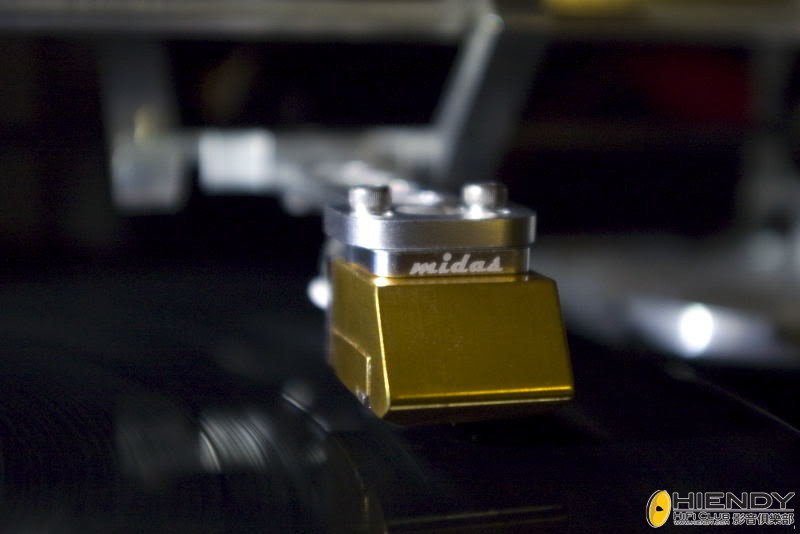
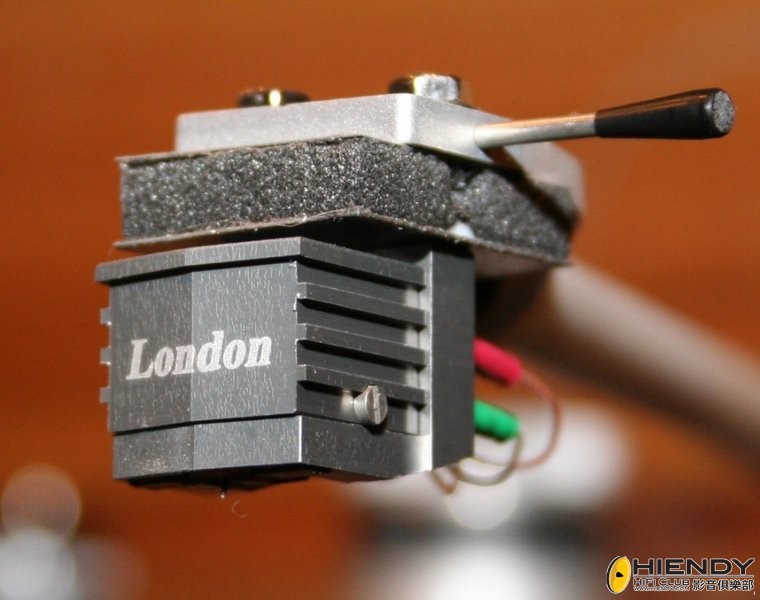
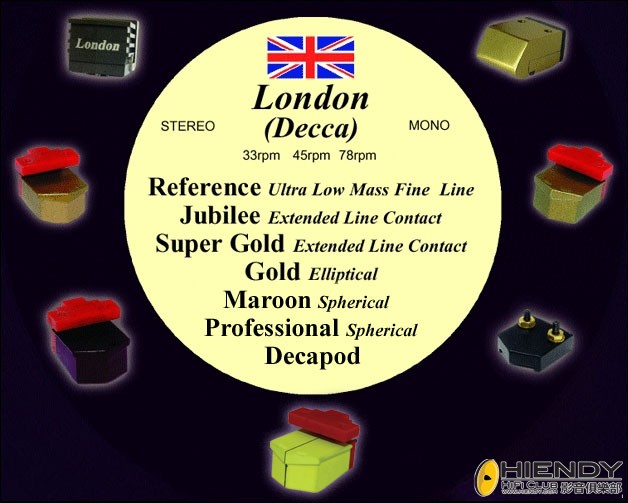
The new Jubilee, so-called in celebration of the 25 years that have passed since the first Decca London cartridge saw the light of day, is built using a milled aluminum-alloy casing whose solidity is reminiscent of the classic Decca pickups of the 1960s, such as the 4RC and the SC4E. The Jubilee is priced at $1600—in typical fine-quality moving-coil territory. For comparison, a (Decca) Super Gold—with the traditional lightweight, sheet Mu-metal, London-type body and fitted with a line-contact van den Hul stylus—costs $650.
Positively coupled
Decca phono cartridges excite wide divergences of opinion among critics. Their contrary natures require unusual care to be taken in system installation and the choice of ancillary equipment, but many audiophiles adore them and will accept no substitute. Some try them out, admire certain aspects of the sound, but fail to reach an acceptable system balance; others fail to get anywhere at all, and wonder what all the fuss is about!
Decca's "Positive Scanning" technology is responsible for what I described some 18 years ago as "both the glimpses of heaven and the occasional taste of hell." (This was in a review of the original Decca London Blue and Gold cartridges. These top-ranking models then retailed for around the $100 mark! How times have changed.)
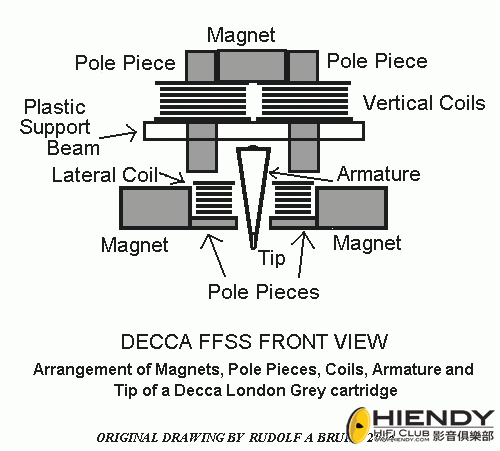
In part, the operating principle is closely related to the variable-reluctance design developed by GE from earlier 78rpm versions in the mid-1950s for monophonic LP playback. I first used one of these designs fitted to a massive Garrard auto changer. The cantilever was made of magnetically permeable alloy, fixed at one end, with the motion of the stylus end sensed directly by two magnetic pole-pieces. Coils wound on these pole-pieces produced the transduced electrical output.
The principle of directly sensing the stylus motion is an attractive one. It avoids the problems that occur with the usual remote-generator systems, which either move coils between the poles of a magnet or move a small induced magnet in front of fixed coils. In either case, the stylus tip motion is transferred to the generator or motor by the cantilever—a lightweight rod or tube.
The cantilever's "lever" is important, as it allows a relatively heavy and efficient electrical generator to be used while ensuring a low overall moving mass as seen at the stylus tip (footnote 2). (Low moving tip mass is directly associated with good trackability, particularly at high frequencies.) Of necessity, the lever must have a pivot point or bearing, and it is here that losses may occur between the tip and the generator. Subjective terms such as "cantilever haze" and "poor generator precision" are often used to describe the sound from such non–direct-coupled designs, equating to losses in clarity, dynamics, and channel separation.
Various direct-coupled moving-coil cartridges have been produced, a current example being the Ikeda Kiwame reviewed by Dick Olsher in February 1993 (Vol.16 No.2, p.164). Several difficulties arise with these units, not the least being the need to attach four lead-out wires to the coil assembly. These wires must all be sufficiently flexible not to interfere with the stylus motion.
The 1950s GE cartridge was required to trace and sense lateral (dual-mono) modulation only. To detect signals recorded in 45/45 stereo (footnote 3). Decca both had to provide some compliance in the vertical direction and add a second magnetic sensor to translate vertical motion into an electrical signal proportional to the difference between the two stereo channels. The lateral and vertical signals, representing the sum (L+R) and difference (L–R) information, respectively, allow the independent left- and right-channel output signals to be extracted. (Neglecting phase and summing the vertical and lateral signals gives L+R+L–R = 2L. Subtracting the vertical signal from the lateral signal gives L+R–L–(–R) = 2R.)
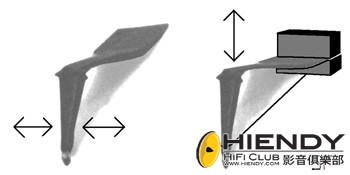
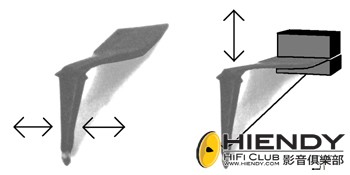
In the Decca stereo pickup design, the moving element, called the "armature," is a two-axis device with a complex form, folded almost to a right angle (fig.A). Decca dubbed the pickup's direct-coupling aspect "Positive Scanning": the vertical motion of the stylus is sensed directly by the vertical pole; similarly, lateral motion is read by the proximate lateral pole. (In this detail, the Decca is similar to the GE system.)

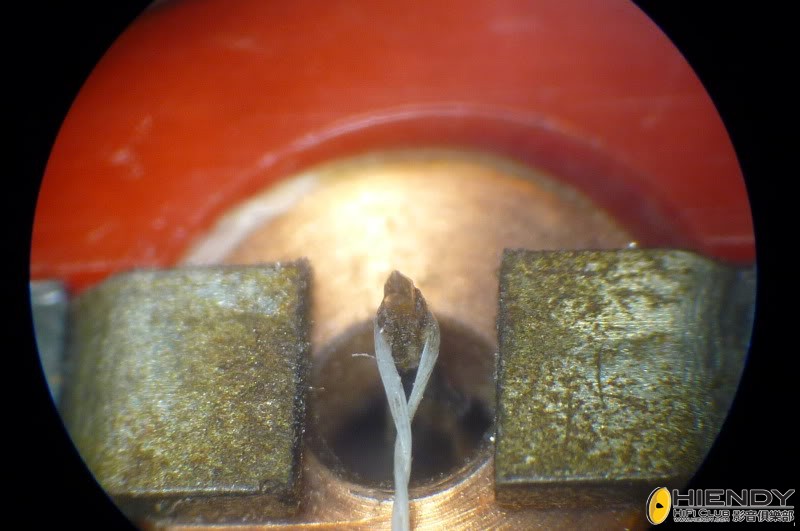
The armature is formed with a press tool from foil sheet just a few microns thick. Tempering in liquid nitrogen stabilizes the mechanical properties of the flexible armature. While its shape ensures rigidity in both required planes—this essential to control resonances in the audible range—ultimately the armature must also flex at the pivot formed at the clamping point. The armature is held—rather improbably in its correctly aligned, pretensioned state—by a short tieback thread or cord visible beneath the cartridge. The armature is also in contact with a thin block of damping medium near the clamp.
Jubilation
Specific technical improvements for the Jubilee include the use of high-flux samarium/cobalt magnets to allow increased clearances between the stylus tip and the carriage body, reducing the tendency for the latter to foul warped discs.
The Decca's high output has been maintained at 1mV/cm/s (typically 5mV for 5cm/s lateral modulation), so no step-ups are required. The generator coils are of quite low inductance, and are relatively unaffected by loading compared to conventional moving-magnet designs. A parallel capacitance of 150–800pF, coupled with a shunt resistance of between 25k and 47k ohms, is optimum. (32k ohms is often suggested.)
Footnote 1: Once a division of the Decca Record Company (of Decca, Deram, London, ffrr, ffss, and not-signing-the-Beatles fame), the Special Products Division became an orphan when the record label was absorbed by PolyGram in the late 1970s.—John Atkinson
Footnote 2: A severe conflict arises between the need to generate sufficient electrical output and the need to keep the mass of the coil assembly as low as possible. (Together with the stylus, this should ideally be less than a thousandth of a gram!)—Martin Colloms
Footnote 3: So-called because each groove wall is at an angle of 45° to the vertical. The modulation for each stereo channel is therefore orthogonal—at 90°—to the other, thus maximizing channel separation. The sum of the two channels' information (L+R) is represented by lateral stylus motion; the difference between the channels (L–R) is represented by vertical motion.—John Atkinson
Some critics have described the standard Decca body as "'kin' plastic." In previous reviews, I had found structural resonance problems in the 200–300Hz region. The Jubilee's new body is precision-machined to be closefitting, and is quite inert. It also provides a clean, flat surface for mounting—complete with internal threads to take well-tensioned fixing bolts. The body mass is up from 4 to 10gm. This is a radical transformation, and should allow the "Positive Scanning" generator to operate to its best ability.
The Jubilee is fitted with the latest extended elliptical (or, more correctly, line-contact) stylus designed and ground by Wyndham Hodgson of Expert Pickups (UK). Made from natural, grain-oriented diamond, it offers a combination of low tip mass and improved tracing accuracy (especially toward the end of side), coupled with long life. A quick look using x50 and x100 magnification with quartz-halogen spot illumination showed the stylus to be well-formed and polished, with a precision mounting.
As with any cartridge, due consideration must be given to the infrasonic arm/cartridge resonance behavior. In a typical arm, the Jubilee actually features two resonances, due to the significantly different values for vertical and lateral compliance. In addition, there is almost no damping of the lateral modes. As with previous Decca cartridges, silicone dashpot damping of the tonearm is a necessity when using the Jubilee, in my opinion.
If you don't use damping with a conventional rigid tonearm, a Decca cartridge will be heard to be in a state of almost constant instability. Not only will the trackability be variable, a "fluttering" affecting channel stability and surface noise will also be heard. With a low-mass tonearm, the lightweight Blue or Gold Deccas will place the vertical resonance in the audible range, typically 20–25Hz, with some +4dB, –6dB of subsequent frequency-response variation. The Jubilee tries to avoid these problems by placing the arm/cartridge resonance below 20Hz with a typical tonearm of 10gm effective mass.
A 2gm downforce is recommended for the Jubilee, with a range of 1.8–2.2gm possible, depending on the sample and on the tonearm/turntable used. Rather than the odd, common-ground, three-terminal arrangement of the older Decca designs, the Jubilee features a normal arrangement of four gold-plated output pins. As regards finish, the polished, gold-anodized Jubilee really looks the part!
Sound
In optimal tune and on discs that didn't tax its tracking abilities, the Jubilee achieved unrivaled dynamics. In this regard, it was the best phono cartridge I've tried—and by some margin! That's what we lost with the flimsy body and mounting used for the older Decca models. My experience proves the direct-coupled principle in spades—at least so far as dynamics are concerned.
The dynamic expression was revelatory, even state-of-the-art; if you like, it sounded "direct-coupled." On top-class, original analog material, the Jubilee made even the best digital replay sound a little tired and washed out. The cartridge was capable of generating spine-tingling excitement!
And there was more! Matching its amazingly natural dynamic expression was a textbook reading of pace, rhythm, and timing in the recorded music. Again, digital remasters replayed on CD were heard to be more downbeat, slower-paced, less convincingly and coherently timed. But on LP with the Jubilee, the band played together with an upbeat, lively quality, drawing the listener into the performance.
But now the downside. Good, well-modulated recordings contain peak amplitudes that are beyond the compass of Deccas—even the Jubilee. The cartridge sounded pretty wonderful until it failed to track, when all hell broke loose. It doesn't mistrack in a subtle manner—you know immediately from the edgy, ringing rattles it produces that something is wrong. Nothing I could do with respect to setup or ancillary components did much to push the trackability envelope.
Tonally, the Jubilee was generally well-balanced, with a smooth, wide response—that is, until it got loud. From "loud" up to the tracking threshold, the Jubilee sounded perceptibly hardened, with a thinner, more nasal, and punchier sound. (And no, I don't think the good dynamic expression was the result of this aspect of its sound.)
Most of the time the Jubilee sounded well-detailed, with fine separation of instrumental lines. But as the going got tough, the Jubilee drew back, with less clarity and more muddle as a result. On heavy rock, the sound was electrifying, but the levels of high-frequency modulation were wearing on the cartridge, which reacted in its defense by beginning to gray the grooves!
In the treble, the Jubilee sounded cleaner, clearer, and purer than the older-style Deccas—something I attribute to the new, inert alloy casing. Likewise, the "boxy" Decca colorations in the lower midrange had been vanquished. As cartridges go, the older-series designs were more than a mite colored; by contrast, the Jubilee ranked as a low-coloration design. The bass sounded soft and uneven compared with a Koetsu or a Linn Troika, but it was still quite good.
Soundstage width was fine, while stage depth was certainly above average—good generally, but not up with the Lyra or the Koetsu, and far behind the vdH Grasshopper GLA.
So there it is: the new Jubilee offers a greater degree of "Decca" heaven, yet that taste of hell remains.
In my opinion, a cartridge's first duty is to track the typical range of groove modulations cleanly and convincingly with minimal wear. The Jubilee still does not attain this required standard, and no amount of musical magic will shift my opinion. Only when the Jubilee can be made to keep in safe contact with the vinyl roadway can its panoply of virtues be appreciated.
Conclusion
Reviewing London's (Decca) Jubilee has been one of those fascinating challenges which can both educate and entertain. The Jubilee sounds marvelous so far as its dynamic expression and rhythm are concerned, where it sets an example to all. A cartridge like this is a must-have for those enthusiasts who value such qualities above all others.
However, this is also a significantly flawed cartridge. This may not prove fatal—it just depends on the demands you plan to make on it, and the care you can lavish on both system-matching and alignment. As in the old nursery rhyme, when it's good, the Jubilee is very, very good; but when it's wrong, it can be horrid.
At its best, the Jubilee was stable and sounded neutral and clean. Technically, it represents a substantial advance for the Decca technology, although the distortion and tracking limit both need more work.
|
|



 IP卡
IP卡 狗仔卡
狗仔卡
 發表於 2016-10-5 14:33:47




 提升卡
提升卡 置頂卡
置頂卡 沉默卡
沉默卡 喧囂卡
喧囂卡 變色卡
變色卡 顯身卡
顯身卡